
Most people don’t think twice about what goes down the drain. It’s easy to treat sinks, toilets, and garbage disposals like convenient waste removal systems, especially during busy cleanups. But behind the scenes, that carelessness can cause expensive plumbing problems, contribute to clogged municipal systems, and harm the environment. What gets washed away doesn’t just vanish — it often sticks around in the worst ways. Knowing what not to pour, flush, or rinse is essential for protecting the pipes at home and water systems that affect everyone.
Cooking Grease and Oil

Grease might look like a liquid when it’s warm, but the moment it cools, it solidifies into a sticky mess. Once it enters the plumbing, it begins coating the inner walls of the pipes. Over time, this buildup creates a thick layer that narrows flow and attracts other debris. Blockages can start small and go unnoticed until water stops draining altogether or backs up into the sink.
Pouring leftover oil or pan drippings into the trash after cooling is much safer. An empty can or jar can collect grease before tossing it with the garbage. Many cities even offer grease recycling programs. Whatever the method, keeping grease out of the plumbing is one of the simplest ways to avoid trouble.
Top Sellers
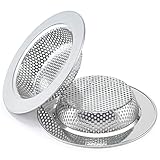
- 【Premium Materials】: Stainless steel sink strainer, bright, long-lasting, rustproof.
- 【Upgrade Design】: Our sink strainer upgrade the double-layer design over the sharp edges prevent…
- 【Easy to Use】: Our sink strainers are easy to use without any tool installation, easy remove and…

- 【ROTATABLE SPOUT】This kitchen sink caddy comes with a rotatable spout that swivels in three…
- 【SMALL VOLUME】 Cisily sponge holder is suitable for kitchens with limited space. It measures…
- 【PREMIUM STURDY MATERIAL】 Cisily kitchen sink organizer is made of premium stainless steel which…
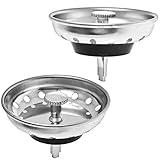
- Pack of 2 Kitchen Basket Strainer and Stopper combo effectively catches food, waste, scrap from…
- Kitchen Sink Strainer and Stopper Combo Basket Replacement fits most of standard 3-1/2 inch kitchen…
- Easy post style sink strainer/basket with a simple push and pull installation and operation; The…
Coffee Grounds

Coffee grounds may seem harmless, but they are a major offender in drain damage. Unlike many food particles, grounds don’t break down in water. Instead, they clump together and become a gritty, mud-like paste that sticks to pipes and accumulates quickly. The situation gets worse when combined with grease or soap residue.
Even garbage disposals can’t grind them down effectively. They might spin them up temporarily, but the grounds still settle and cause buildup deeper in the system. It’s smarter to compost them or toss them directly into the trash. Keeping grounds out of the drain helps maintain smooth plumbing and prevents long-term damage.
Flour and Dough

Flour and water combine to create a glue-like paste that clings to pipes and traps other debris. This sticky consistency becomes a serious problem when it hardens inside plumbing systems. The dough is even worse, expanding as it absorbs moisture and creating a soft blockage that grows over time. Unlike oil or coffee, flour-based clogs can form silently and go unnoticed for weeks.
Instead of rinsing bowls or countertops with raw flour directly into the sink, it’s better to scrape everything into the trash first. Even a small amount left on utensils or mixing bowls can cause problems when done repeatedly. Creating a habit of wiping down with a paper towel before rinsing can make a big difference.
Last update on 2026-09-18 / Affiliate links / Images from Amazon Product Advertising API


